
Magnetic Stripe Cards
A magnetic stripe card is a plastic card with a stripe on the back that stores data readable by magnetic fields. Made of a magnetizable material such as iron oxide or barium ferrite, the stripe is designed to store digital information. It stores data in binary form (0s and 1s) by arranging tiny magnetic particles. This simple design makes it easy to store and retrieve information, which is why magnetic stripe cards are widely used in banking and identification. Tacs Contracting LLC is the leading supplier of magnetic stripe cards in Dubai, Abu Dhabi, the UAE, KSA, and all over the Middle East and Africa.
The reader detects changes in this stripe field when it swipes or places a magnetic stripe card on a card reader. This helps the reader verify the cardholder's identity or access rights. This capability is essential for financial transactions, secure access systems, and various service industries that require fast and reliable identification.
These cards are used for banking, identification, hotel access, and transportation. They are simple to use and not very significant, but they do have certain issues. Over time, the card's components deteriorate, and its data is readily copied or deleted. Many organizations use magnetic stripe cards, as well as chip-driven (EMV) and contactless (NFC) cards, which take longer to resolve these issues.
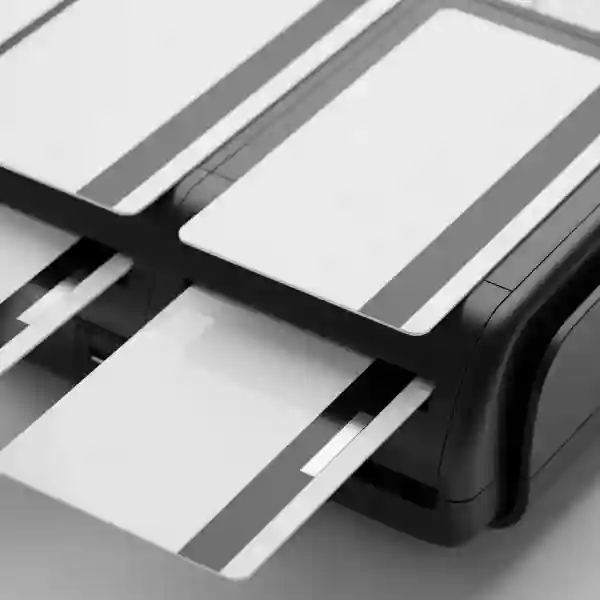
Trusted Supplier of Magnetic Stripe Cards in Dubai
Businesses and organizations can customize our high-quality magnetic stripe cards to suit their specific needs. These cards are great for keeping track of attendance, identifying employees, keeping track of time, maintaining memberships, and processing payments. They are inexpensive and simple to use. We ensure that the custom magnetic stripe cards we manufacture are of the highest quality in terms of reliability, functionality, and ease of use.
Types of Magnetic
Stripe Cards
Bank cards allow electronic payments, cash withdrawals, and fund transfers. The magnetic stripe stores data that enables quick verification of transactions
Identification cards are plastic cards used to verify someone's identity. They are usually issued to students, employees, or members of organizations to verify their identity and access. Typically, the front of the card showcases the user's name, photo, signature, and identification number, allowing for effortless visual identification. Identification cards are widely used as student ID cards, employee badges, and access passes to conferences or events. The magnetic stripe stores data about the person's identification and access authorization.
Common uses: hotel room key cards, employee security badges for attendance systems, and building access cards (for staff/contractors).
The access control cards are plastic cards that grant access to secure or restricted areas. The reader checks the information on the card and grants access only to authorized people. The magnetic stripe or chip on the card stores the user's ID, access status, and time, etc. This feature helps organizations maintain workplace privacy by reducing the chances of lost keys or unauthorized entry.
Organizations such as shops, gyms, and cafes issue them to reward their regular customers. When customers make purchases, they swipe or scan the card to earn points and get discounts or special offers. This system makes it easy to reward repeat buyers and lets companies change promotions based on customer habits.
Gift and prepaid cards are plastic payment cards that are preloaded with money. Since they are not linked to a bank account, they are ideal for safe and controlled spending. Certain cards are disposable after the balance is used, while others can be reloaded for reuse. The magnetic stripe keeps track of the balance and transaction history, making spending easy to manage.